Why Is Everyone Making Eggs for Dinner in 2026? (Not Just Breakfast)
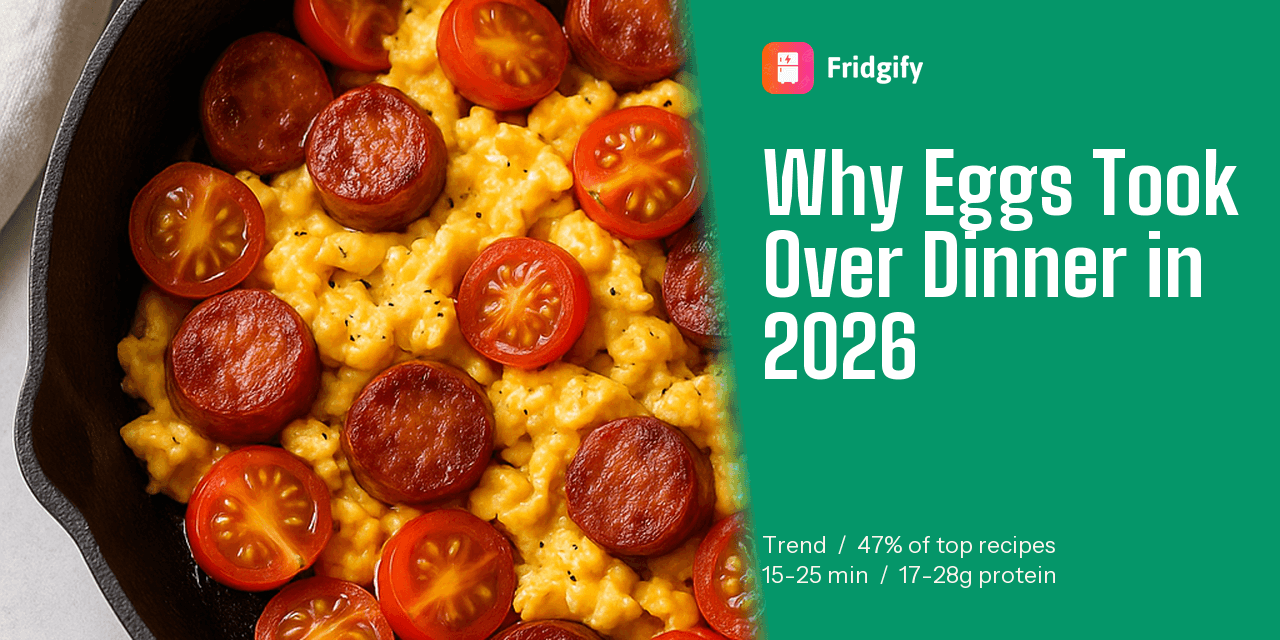
It is 6:40 p.m., you are tired, and the only reliable protein in the house is a carton of eggs. A few years ago that felt like giving up. In 2026 it is the plan — eggs for dinner has quietly become one of the most popular ways home cooks get a hot, high-protein meal on the table in under 25 minutes.
What is the "eggs for dinner" trend?
Eggs for dinner is the shift of eggs out of the breakfast slot and into the main evening meal. Instead of cereal-adjacent scrambles, cooks are building skillets, fried rice, noodle bowls, and loaded wraps around eggs as the primary protein. It is fast, cheap, and endlessly adaptable to whatever else is in the fridge.
The trend is not a marketing invention. Across the recipes Fridgify home cooks saved, cooked, and talked about most over the past twelve months, eggs turned up in 20 of 43 top recipes — roughly 47%. Eight of those had eggs in the name itself, and every one of those eight landed between 15 and 30 minutes.
That is a striking concentration for a single ingredient. Chicken, rice, and tomatoes are the only things that come close.
Why are home cooks eating eggs at dinner instead of breakfast?
Three forces are stacking. Weeknight time budgets keep shrinking, grocery prices have pushed people toward cheaper complete proteins, and the "breakfast-for-dinner" idea lost its novelty stigma. Eggs cook in minutes, need no thawing, keep for weeks, and pair with almost every cuisine — which makes them the lowest-friction dinner protein in the kitchen.
Breakfast is also the meal people increasingly skip or shrink. Coffee-and-a-bar mornings leave the egg carton untouched, so it migrates to the only meal that still gets real cooking attention.
There is a practical angle too. Eggs are one of the few proteins you can commit to after you have opened the fridge and seen what is actually in there. A chicken thigh requires a plan. Eggs require a pan.
Are eggs enough protein for a real dinner?
Two large eggs deliver roughly 12–13 grams of protein — enough for a snack, but light for a full dinner. The fix is pairing, not more eggs. Add chorizo, chicken, tofu, cheese, or beans and a typical egg dinner lands at 17–28 grams per serving, which is squarely in normal main-course territory.
You can see this in the numbers from the most-loved egg dinners of the past year:
| Egg dinner | Time | Protein per serving | Calories |
|---|---|---|---|
| Spanish Chorizo and Kimchi Scrambled Eggs | 15 min | 26 g | 420 |
| Korean-Style Tomato Egg Cheese Scramble | 18 min | 17 g | 285 |
| Spanish-Style Chorizo and Egg Skillet | 20 min | 24 g | 385 |
| Thai-Style Egg Noodles with Chicken and Mushrooms | 25 min | 28 g | 385 |
| Simple Spinach and Egg Stir-Fry | 25 min | 13 g | 220 |
The pattern is consistent: eggs supply the base and the binding, and one savory partner ingredient carries the protein the rest of the way.
What egg dinners can you make in under 25 minutes?
The fastest formats are the skillet, the scramble, the stir-fry, and the wrap. All four skip the oven entirely, use one pan, and finish in 15–25 minutes. The most popular examples this year were a chorizo-and-egg skillet, a tomato-and-cheese scramble, a spinach-and-egg stir-fry, and a crispy egg-and-feta wrap.
Here is the shortest route to each:
- Skillet (20 min). Brown a sliced sausage, add halved cherry tomatoes until they burst, crack the eggs straight into the gaps, cover for three minutes. One pan, no plating skill required.
- Scramble (15–18 min). Cook a hard partner ingredient first — chorizo, kimchi, diced tomato — then pull the heat down before the eggs go in. Cheese at the very end.
- Stir-fry (25 min). Vegetables first over high heat, eggs pushed in at the end, soy sauce off the heat so it does not scorch.
- Wrap (18 min). Soft-scramble the eggs, warm a tortilla, add feta or a sharp cheese and something crunchy. Eat standing up if that is the kind of night it is.
A useful rule: cook the ingredient that needs the most heat first, and let the eggs be the last thing to touch the pan.
Is it healthy to eat eggs every day?
For most healthy adults, current dietary guidance treats an egg a day as reasonable. Eggs are a complete protein with choline, B12, and lutein for around 70–80 calories each. What usually decides whether an egg dinner is "healthy" is not the eggs — it is the butter, cheese, and cured sausage cooked alongside them.
If you have been told to watch your cholesterol or you manage heart disease or diabetes, egg frequency is worth a specific conversation with your doctor rather than a rule of thumb from a blog.
The easy lever at home is the pairing. A chorizo scramble sits near 420 calories with 32 grams of fat; the same technique with tomatoes, spinach, and a modest handful of cheese lands closer to 285 calories and 21 grams. Same 18 minutes, very different plate.
What should you serve with eggs for dinner?
Serve eggs with one starch and one acidic or crunchy element. Rice, noodles, toast, or potatoes carry the meal; something sharp — pickles, kimchi, quick-dressed salad, salsa, or a squeeze of lemon — keeps the richness from flattening out. That two-part rule turns a scramble into a dinner rather than a snack.
The acid step is the one people skip, and it is why homemade egg dishes often taste heavier than restaurant versions. Fat plus protein with nothing bright to cut it reads as monotonous by the fourth bite.
If you want the meal to hold up as leftovers, lean on rice or noodles rather than toast. Fried rice reheats. Toast does not.
Can you meal prep egg dinners ahead of time?
Partly. Scrambles and fried eggs are worst reheated, so prep the components instead of the finished dish. Cook and refrigerate the rice, noodles, sausage, or roasted vegetables for up to four days, then cook the eggs fresh in three minutes on the night. You get meal-prep speed without the rubbery texture.
Two egg formats do survive the fridge well: frittata-style baked eggs and fried rice. Both hold their structure because the eggs are bound to something starchy or set in a slab rather than left as loose curds.
A realistic weeknight rhythm looks like this — cook a big batch of rice or noodles on Sunday, keep a sausage or block of tofu ready to go, and treat the eggs as the five-minute finishing move. That single habit turns four different dinners out of one prep session, and none of them taste like a container.
How do you keep scrambled eggs from turning rubbery?
Rubbery eggs are almost always a heat problem, not a technique problem. Use medium-low heat, pull the pan off the burner while the curds still look slightly underdone, and let carryover heat finish them. Salt just before serving, and add cheese or cream off the heat so it melts instead of tightening the proteins.
Two more things that matter more than they should:
- Do not over-beat. Ten seconds with a fork is enough. Whipping in a lot of air makes the eggs puff, then collapse into something spongy.
- Give them room. A crowded pan steams the eggs. Two eggs per person in a pan that fits them in a shallow layer cooks far more evenly.
For a soft scramble, plan on the eggs looking about 20% wetter than you want when they leave the pan.
How do I decide which egg dinner to make with what I already have?
Start from your fridge, not from a recipe search. Photograph or list what is actually on the shelves, then let Fridgify match those ingredients to full recipes — including the egg-based skillets, scrambles, stir-fries, and wraps that home cooks have rated highest. You get a real dinner plan in seconds instead of scrolling through recipes that require a store run.
This is where the egg trend and the "cook what you have" habit meet. Eggs are the flexible constant; the other 80% of the meal is whatever needs using up. A half-bag of spinach, two soft tomatoes, and the end of a block of cheese is not a shopping list problem — it is a 20-minute dinner you have not thought of yet.
Fridgify handles that translation step, and it counts the eggs you already have as an asset rather than an afterthought.
Try Fridgify
Fridgify turns what is already in your fridge into tonight's recipe — with cook times, calories, and step-by-step instructions. Free to start.
- iOS: https://apps.apple.com/us/app/fridgify-ai-meets-your-fridge/id6755527989
- Android: https://play.google.com/store/apps/details?id=app.eodin.fridgify
- Web: https://fridgify.eodin.app
Open the fridge, snap what you see, and let the eggs do the rest.
Frequently Asked Questions
What is the 'eggs for dinner' trend in 2026?
The 'eggs for dinner' trend involves using eggs as the main protein in evening meals instead of just breakfast. Home cooks are making skillets, scrambles, stir-fries, and wraps centered around eggs because they are fast, affordable, and versatile.
Why are eggs becoming a popular choice for dinner instead of breakfast?
Eggs are popular for dinner due to shrinking weeknight time budgets, rising grocery costs, and the fading novelty of breakfast-for-dinner. Eggs cook quickly, require no thawing, last weeks in the fridge, and pair well with many ingredients, making them a low-effort protein option.
Are eggs alone enough protein for a full dinner?
Two large eggs provide about 12–13 grams of protein, which is light for a full meal. Most egg dinners pair eggs with another protein like chorizo, chicken, tofu, or beans to reach 17–28 grams of protein per serving, making the meal more satisfying and nutritionally balanced.
What are some quick egg dinner ideas that can be made in under 25 minutes?
Popular quick egg dinners include skillets, scrambles, stir-fries, and wraps. These one-pan meals typically take 15–25 minutes and involve cooking the main protein or vegetables first, then adding eggs last for a fast, flavorful dinner.
Is it healthy to eat eggs every day for dinner?
For most healthy adults, eating an egg a day is considered reasonable and nutritious, providing complete protein and essential nutrients. However, the healthiness depends more on what eggs are paired with, such as butter, cheese, or cured meats, and those with specific health conditions should consult a doctor.
Continue reading
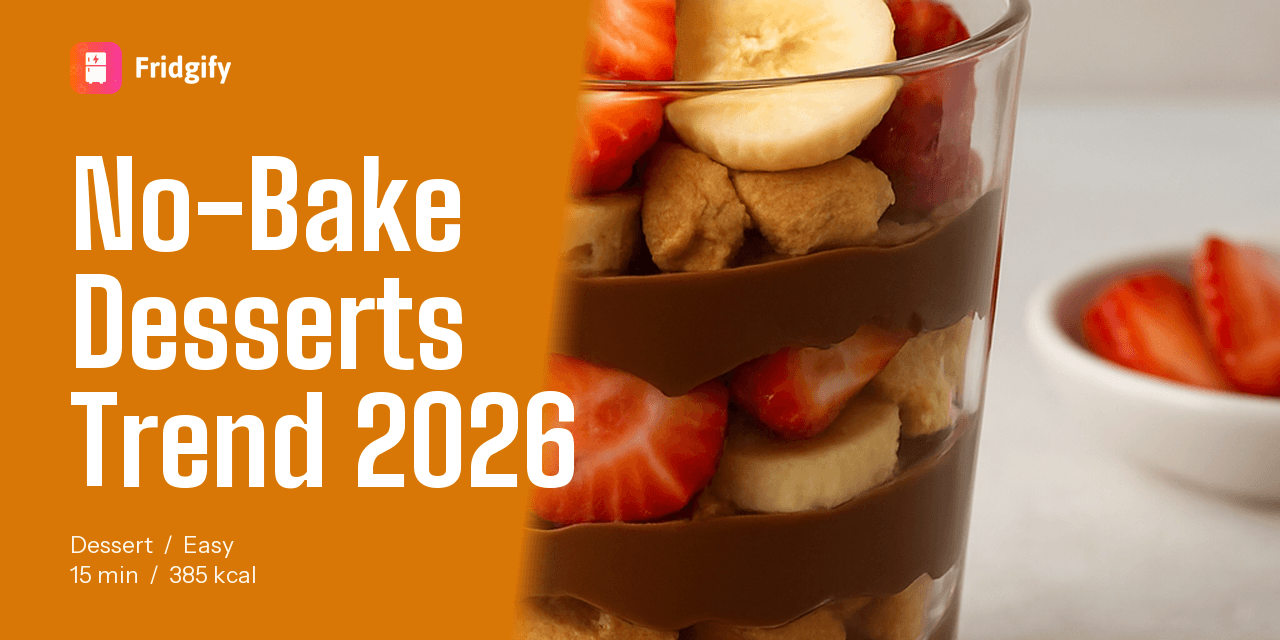
Why Are No-Bake Desserts Taking Over Home Kitchens in 2026?
No-bake desserts are the 2026 home-kitchen trend. Why cooks skip the oven, plus three easy Fridgify parfait, chocolate square, and candy platter ideas.
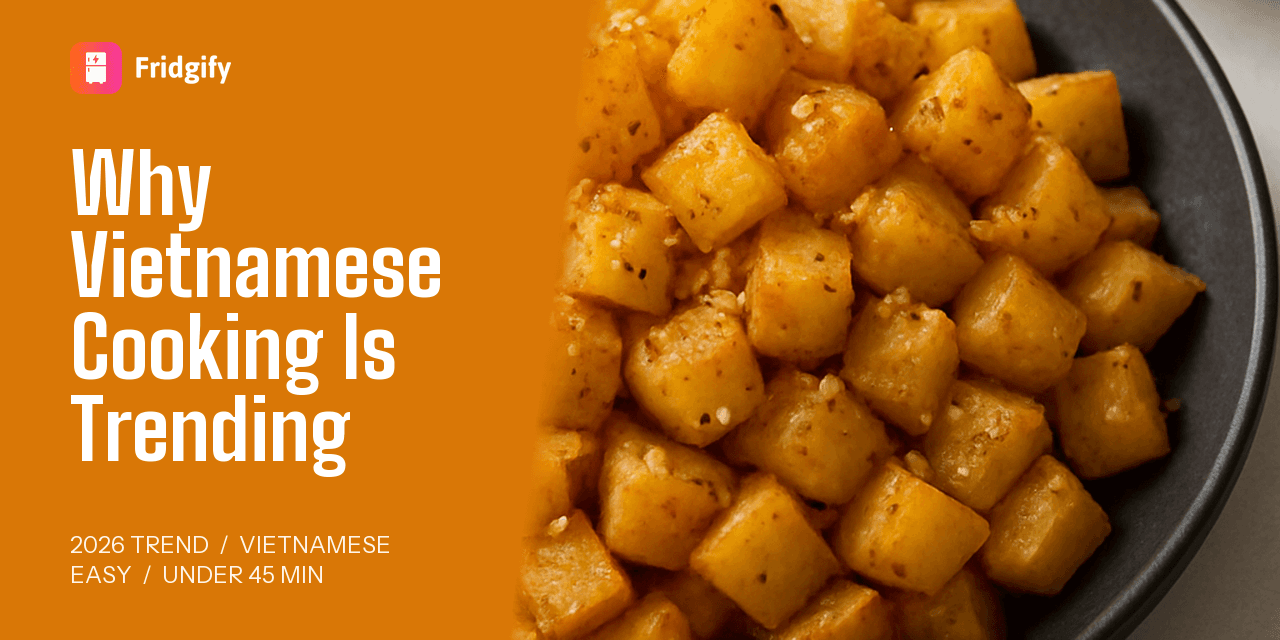
Why Is Vietnamese Home Cooking Taking Over Home Kitchens in 2026?
Vietnamese home cooking is one of 2026's biggest kitchen trends. Learn why, which pantry staples you need, and the easiest dishes to cook this week.
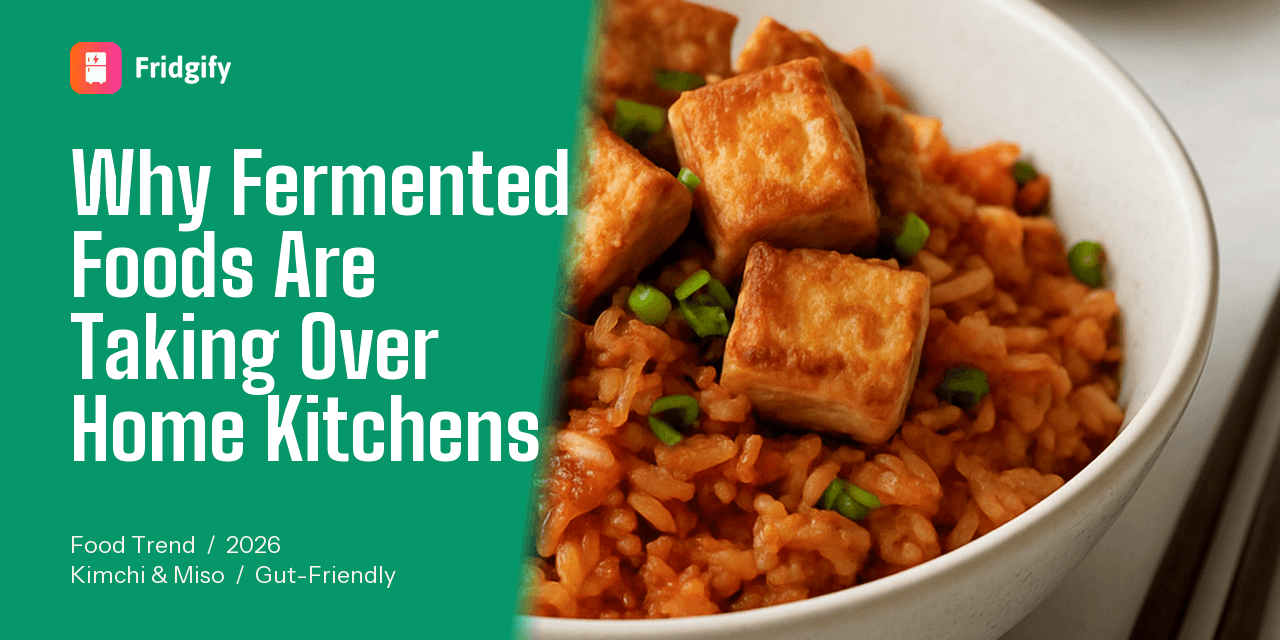
Why Are Fermented Foods Taking Over Home Kitchens in 2026?
Kimchi, miso, and yogurt are jumping from health-store curiosity to weeknight staple. Here is why fermented foods are trending in 2026 and how to cook with them.