How Long Does a Fever Last After a Vaccine? (A Parent’s Guide to What’s Normal)
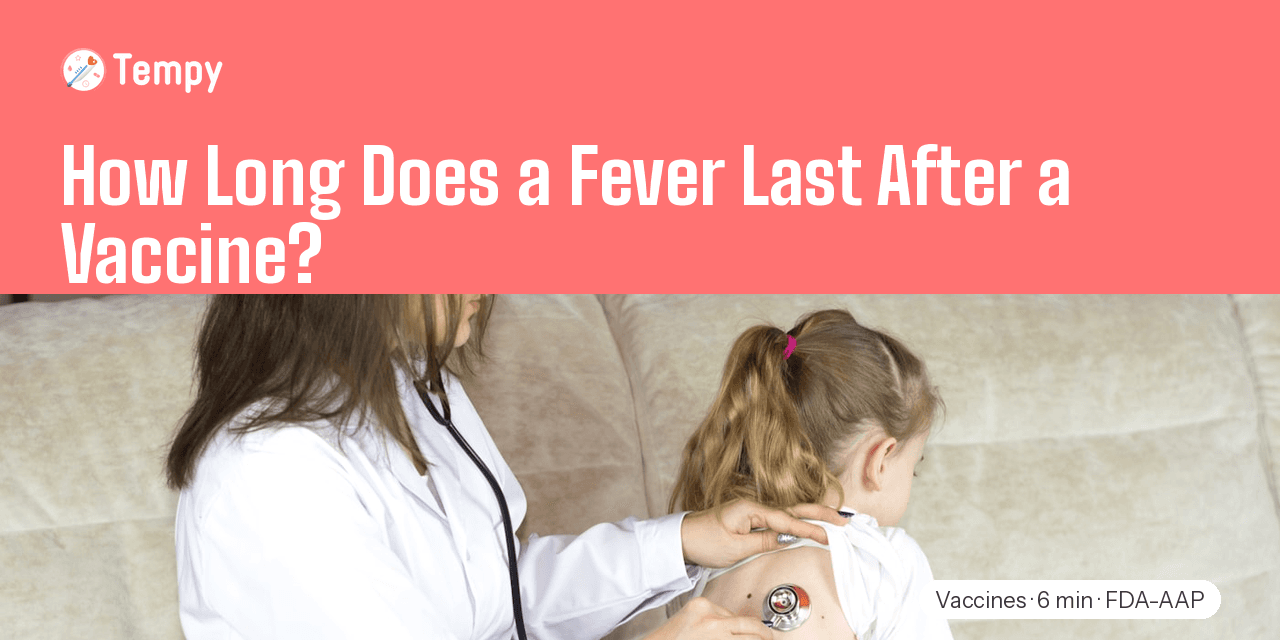
How Long Does a Fever Last After a Vaccine? (A Parent's Guide to What's Normal)
Your child got their shots this morning, the bandage is barely off, and now their forehead feels warm. Your stomach drops. Is this normal? How long will it last? Should you be worried? Take a deep breath. A mild fever after vaccination is one of the most common, expected, and short-lived reactions in pediatric medicine — it's a sign that your child's immune system is doing exactly what the vaccine asked it to do. This guide walks you through how long a post-vaccine fever should last, which shots are the usual culprits, and the small handful of red flags that mean it's time to call the doctor.
This post is general information, not medical advice, and Tempy supports your judgment rather than replacing your pediatrician. If something feels wrong, trust your instinct and call.
How long does a fever last after a vaccine?
Most post-vaccine fevers begin within 12 hours of the shot and clear up within 24 to 48 hours. A few vaccines, especially MMR and chickenpox, can cause a delayed fever that shows up 5 to 12 days later and lasts 1 to 2 days. Anything beyond 72 hours from onset deserves a call to your pediatrician.
The pattern is predictable enough that you can plan around it. Here is the typical timeline for a healthy child:
| Time after shot | What's usually happening |
|---|---|
| 0–12 hours | Soreness at injection site; possible low-grade warmth |
| 12–24 hours | Fever often peaks; fussiness, sleepiness, reduced appetite |
| 24–48 hours | Fever fades; child gradually returns to baseline |
| 48–72 hours | Most symptoms resolved; lingering tenderness at the site is OK |
| 5–12 days (MMR/varicella only) | Possible delayed mild fever and faint rash for 1–2 days |
If the fever extends past 72 hours from when it first started, or if it climbs rather than falls on day two, that's outside the typical window and worth a check-in with your pediatrician.
Is a fever after vaccination normal?
Yes — a mild fever after vaccination is normal and expected. It happens because the vaccine has taught the immune system to recognize a new threat, and the body's response includes a small inflammatory signal, which we feel as warmth. The CDC and AAP both list low-grade fever as a common, harmless side effect of nearly every routine childhood vaccine.
A fever is not a sign the vaccine "didn't work" or "made your child sick." It is the immune system rehearsing its response. Roughly 1 in 4 children will run a low-grade fever after a standard well-child visit with multiple shots, and the rate is higher for vaccines that produce stronger immune responses (DTaP, MMR, pneumococcal). It's also why pediatricians often warn parents to "expect a warm baby tonight" before they even leave the clinic.
What is not normal is a very high fever, a fever that lasts beyond 72 hours, or a fever paired with red-flag symptoms (covered below). Those need medical attention.
When does a post-vaccine fever start?
Most post-vaccine fevers begin within the first 12 hours after the shot and peak around the 24-hour mark. Live-attenuated vaccines (MMR, varicella) are the exception — they can cause a fever 5 to 12 days later because the weakened virus needs time to replicate enough to trigger an immune signal.
Knowing which vaccine your child just received tells you when to watch for fever:
- Same-day to 24 hours: DTaP, Tdap, Hib, hepatitis B, pneumococcal (PCV), flu shot, COVID-19, RSV
- 5 to 12 days later: MMR (measles, mumps, rubella), varicella (chickenpox), MMRV
- Highly variable: Rotavirus (oral) — usually mild GI symptoms more than fever
Write down the date and time of the shots and the names of the vaccines given. Tempy's caregiver-shared timeline can hold this for you so the other parent or a grandparent isn't guessing when "the warm spell" should pass.
Which vaccines are most likely to cause a fever?
DTaP and the pneumococcal (PCV13/PCV15) vaccines are the most common culprits in the first 24 hours, while MMR and varicella are the usual cause of delayed fevers a week or so later. Combination shots and multiple shots given at the same well-visit raise the chance simply because more vaccines are working at once.
A rough sense of who causes what:
| Vaccine | Fever risk | Typical onset |
|---|---|---|
| DTaP / Tdap | Moderate | 0–24 hours |
| Pneumococcal (PCV) | Moderate–high (especially with DTaP) | 0–24 hours |
| Hib | Mild | 0–24 hours |
| Hepatitis B | Mild | 0–24 hours |
| Influenza (flu shot) | Mild–moderate | 0–24 hours |
| COVID-19 (mRNA) | Mild–moderate | 0–48 hours |
| MMR | Moderate | 5–12 days |
| Varicella (chickenpox) | Mild | 5–12 days |
| MMRV (combination) | Higher than MMR alone | 5–12 days |
| Rotavirus (oral) | Low | Variable, usually mild |
This doesn't mean any of these vaccines are "worse" — it just helps you anticipate when to watch the thermometer.
How high is too high for a post-vaccine fever?
For children over 3 months, a temperature up to about 102°F (38.9°C) for 1 to 2 days is within the typical post-vaccine range. A fever climbing above 104°F (40°C), lasting longer than 72 hours, or appearing in an infant under 3 months is not a normal vaccine reaction and needs medical evaluation — call your pediatrician, or 911 if your child looks seriously unwell.
Two age-based rules that override everything else:
- Under 3 months old: Any rectal temperature of 100.4°F (38°C) or higher needs same-day medical evaluation, regardless of whether your baby just had a shot. Do not try to manage this at home.
- 3 to 6 months old: Call your pediatrician for any fever over 102°F (38.9°C), even if it seems like a vaccine reaction.
For older children, the behavior of your child matters more than the exact number on the thermometer. A toddler running 101.8°F who is still drinking, smiling between fussy spells, and dozing on the couch is far more reassuring than a child at 100.6°F who is limp, unresponsive, or won't take a sip of anything.
Can I give my child fever medicine after a vaccine?
Yes, once the fever has started and your child is uncomfortable, weight-appropriate acetaminophen (Tylenol) or — for children over 6 months — ibuprofen (Motrin/Advil) are both safe options for a post-vaccine fever. Always dose by your child's current weight, not age, follow the label or your pediatrician's instructions, and use the syringe in the package — not a kitchen spoon.
A few important nuances:
- Don't pre-medicate. Older guidance to give Tylenol before a shot has been revised: some studies suggest it can slightly blunt the vaccine's immune response. Wait until your child actually has a fever or is clearly uncomfortable.
- Respect the intervals. Per FDA/AAP pediatric guidance, acetaminophen is dosed every 4 to 6 hours and ibuprofen every 6 to 8 hours. If you alternate the two, leave at least a 3-hour gap between any two doses.
- Ibuprofen is not for babies under 6 months. Use acetaminophen only for younger infants, and call the pediatrician first for any infant under 3 months.
- Skip aspirin entirely for children with viral or post-vaccine fever — it is linked to Reye's syndrome.
Tempy's weight-based reminders are designed for exactly this situation: log the dose, the time, the medicine, and you'll get a calm nudge when the next safe window opens — instead of staring at the clock at 3 a.m. trying to do mental math.
When should I call the doctor for a fever after a shot?
Call your pediatrician (or 911 if your child looks very ill) if the fever is above 104°F (40°C), lasts longer than 72 hours, appears in an infant under 3 months, or comes with any red-flag symptoms — a stiff neck, a spreading rash, breathing trouble, persistent vomiting, a seizure, or unusual lethargy where you cannot rouse your child.
Use this short red-flag checklist:
- Infant under 3 months with any fever ≥100.4°F (38°C) — call now, regardless of vaccines
- Fever above 104°F (40°C), or rising on day 2 instead of falling
- Fever lasting more than 72 hours from onset
- Stiff neck, bulging soft spot (in babies), or sensitivity to light
- Difficulty breathing, wheezing, or bluish lips
- Widespread rash, especially one that does not blanch when you press a glass against it
- A seizure of any kind (call 911 — see Tempy's febrile seizure guide)
- Inconsolable crying for more than 3 hours, or unusual floppiness/lethargy
- Signs of dehydration: no wet diaper for 8+ hours, no tears when crying, sunken eyes
A serious allergic reaction (anaphylaxis) is extremely rare and almost always happens within minutes of the shot — that's why clinics ask you to stay 15 minutes after vaccination. If hives, swelling, or breathing difficulty appear within an hour of the shot, call 911 immediately.
How can I keep my child comfortable after a vaccine?
Offer extra fluids, dress them in light, breathable layers, let them rest as much as they want, and apply a cool damp cloth to the injection site for soreness. Give weight-appropriate fever medicine if they're uncomfortable, and skip the cold baths and rubbing alcohol — both are outdated and can backfire.
Practical comfort moves that actually help:
- Push fluids. Breast milk, formula, water, an electrolyte drink for older kids — anything to keep them hydrated. Fever increases fluid loss.
- Dress lightly. One light layer. Bundling up traps heat and makes the fever feel worse.
- Cool, not cold. A lukewarm washcloth on the forehead or the injection site is soothing. Cold baths and ice cause shivering, which actually raises core temperature.
- Move bedtime up. Sleep is when the immune system does most of its work. Don't fight a nap.
- Watch and log. Note temperatures, doses, and how your child is acting. A clear log makes the pediatrician's job easier if you do end up calling.
- Soreness at the site. A cold pack for 10 minutes, then gentle movement of the arm or leg, helps relieve the tender spot from the needle.
Most post-vaccine fevers are over almost as quickly as they begin. By the second morning, you'll usually have your normal child back — slightly battle-tested, with a little more immune memory than the day before.
Try Tempy
Tempy is the calm companion designed for the exact 48 hours after a shot, when you're tired, unsure, and watching a thermometer. Log temperatures with one tap, get weight-based medication reminders that respect FDA/AAP intervals, and share the timeline with the other parent or grandparent in real time — so nobody has to ask "did you already give Tylenol?"
Frequently Asked Questions
How long does a fever typically last after a child receives a vaccine?
Most post-vaccine fevers start within 12 hours and resolve within 24 to 48 hours. Some vaccines like MMR and varicella can cause a delayed fever 5 to 12 days later lasting 1 to 2 days. Any fever lasting beyond 72 hours should prompt a call to your pediatrician.
Is it normal for a child to have a fever after vaccination?
Yes, a mild fever is a common and expected reaction after vaccination. It indicates the immune system is responding to the vaccine. Low-grade fevers are listed as normal side effects by the CDC and AAP for most routine childhood vaccines.
When should I be concerned and call the doctor about a post-vaccine fever?
Contact your pediatrician if the fever is above 104°F (40°C), lasts longer than 72 hours, occurs in an infant under 3 months old, or is accompanied by serious symptoms like stiff neck, difficulty breathing, seizures, or a spreading rash. For infants under 3 months, any fever over 100.4°F (38°C) requires immediate medical evaluation.
Can I give my child fever medicine after vaccination, and what should I use?
Yes, you can give weight-appropriate acetaminophen or ibuprofen (for children over 6 months) once the fever starts and your child is uncomfortable. Avoid pre-medicating before the shot, follow dosing intervals carefully, and never give aspirin to children with fever due to risk of Reye's syndrome.
What are the best ways to keep my child comfortable after a vaccine?
Offer plenty of fluids, dress your child in light layers, allow extra rest, and use a cool damp cloth on the injection site to ease soreness. Avoid cold baths or rubbing alcohol, and consider giving fever medicine if your child is uncomfortable.
Continue reading
What Is Roseola? The Fever-Then-Rash Pattern in Babies and Toddlers
Roseola causes a sudden high fever in babies and toddlers, then a pink rash once it breaks. Here's what's normal, how it spreads, and when to call the doctor.
How Much Fever Medicine Should I Give My Child? (Dosing by Weight)
Fever medicine for kids is dosed by weight, not age. Here is why the package chart falls short, how to measure accurately, and what to do if you think you gave too much.
Child Has a Fever but No Other Symptoms? What It Usually Means
Your child has a fever but no other symptoms - no cough, no rash, nothing. What that usually means, how long it lasts, and when to call the doctor.