Why Is Fusion Cooking Taking Over Home Kitchens in 2026?
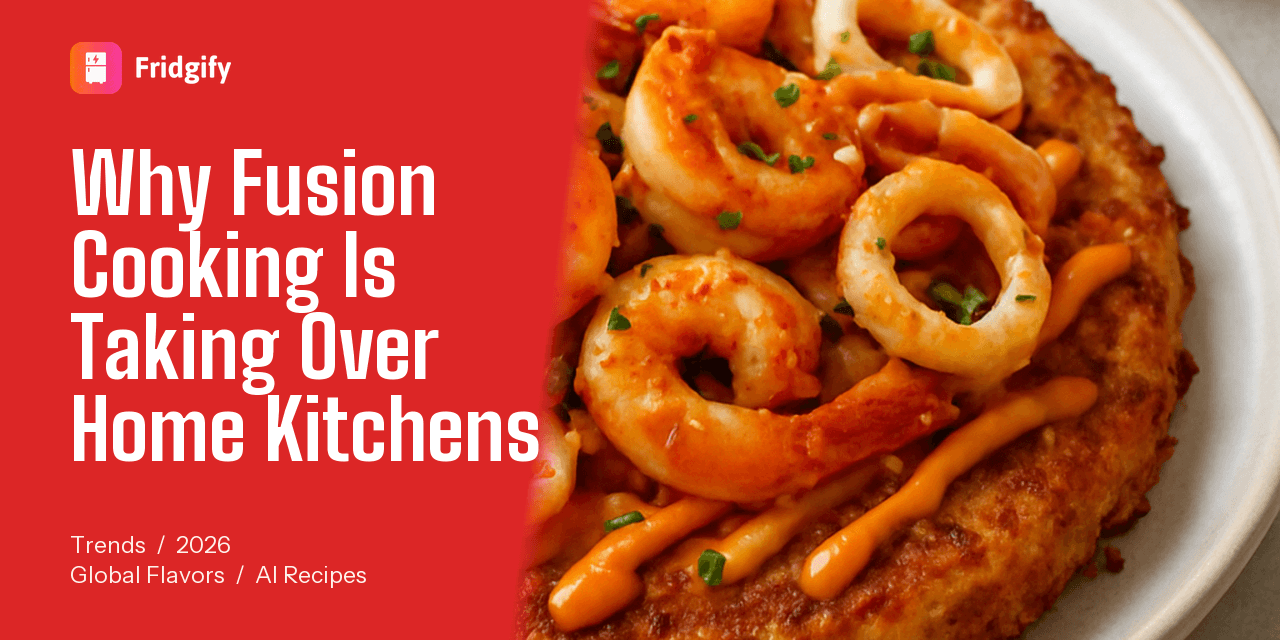
Open your fridge tonight and you might find kimchi, feta, tahini, and Thai basil all sitting on the same shelf. A decade ago that pantry would have looked chaotic. In 2026 it looks like dinner. Home cooks are done choosing between cuisines, and fusion cooking is quietly becoming the default way people actually eat at home.
What is fusion cooking?
Fusion cooking is the practice of combining ingredients, techniques, or flavor profiles from two or more culinary traditions in a single dish. A Kimchi Okonomiyaki blends Korean fermentation with Japanese griddle cooking. A Middle Eastern Pesto Pasta pairs Italian basil with za'atar and tahini. It is not confusion — it is deliberate, balanced cross-pollination.
Fusion is older than the word itself. Chinese-Peruvian chifa, Japanese curry, and Tex-Mex have all existed for generations. What changed in 2026 is that fusion left the restaurant and moved into the home kitchen.
Why is fusion cooking so popular in 2026?
Three forces collided. First, global grocery aisles are now mainstream — gochujang, miso, harissa, and preserved lemon sit on the same shelf at the average supermarket. Second, short-form video has made unfamiliar ingredients feel familiar. Third, AI meal-planning apps like Fridgify suggest fusion recipes based on what you already have, removing the guesswork from pairing ingredients across traditions.
The practical driver is just as important: groceries are expensive, and nobody wants to buy separate pantries for Italian, Korean, and Mexican night. Fusion lets one jar of gochujang pull weight across five meals instead of one.
What fusion dishes are home cooks actually making right now?
Looking at the most-engaged recipes on Fridgify over the past year, five fusion styles dominate home kitchens in 2026:
| Fusion style | Example dish | Why it works |
|---|---|---|
| Korean-Japanese | Kimchi Tapioca Okonomiyaki | Fermented tang cuts through the savory batter |
| Thai-Greek | Hellenic-Thai Crispy Wrap with Lemongrass Mayo | Feta's saltiness anchors Thai herbs |
| Middle Eastern-Italian | Pesto Pasta with Za'atar and Cherry Tomato | Olive oil is the shared backbone |
| Korean-Italian | Gochujang Cacio e Pepe | Heat meets cheese and black pepper |
| Multi-continent | Kimchi-Feta Shakshuka with Thai-Miso Cream | Umami layered from four traditions |
Notice the pattern: none of these are gimmicks. Each pairing shares at least one flavor axis — salt, fermentation, fat, or acid — that lets the two traditions speak to each other.
How do you start fusion cooking at home without it tasting weird?
Start by pairing cuisines that share a flavor backbone. Mediterranean and Middle Eastern both lean on olive oil and lemon. Korean and Japanese share soy and sesame. Mexican and Italian both love tomato and garlic. Pick two cuisines with an overlap and swap just one element — the protein, the sauce, or the carb — rather than reinventing the whole plate.
A reliable first recipe is a familiar base plus one adventurous accent. Keep the structure of a dish you already know — tacos, pasta, fried rice, grain bowl — and swap a single component. Pasta with kimchi butter. Tacos with bulgogi. Rice bowls with tzatziki. The familiar base protects you if the accent does not land.
What flavor pairings work best for fusion recipes?
The four most forgiving fusion pairings for beginners are:
- Kimchi + dairy. Sour fermentation cuts rich cheese, butter, or cream. Think kimchi grilled cheese, kimchi mac, kimchi cream pasta.
- Miso + butter. Japanese umami inside any Western comfort dish. Miso butter on roasted carrots, miso caramel brownies, miso mashed potatoes.
- Harissa + honey. North African heat balanced by sweetness. Works on chicken, roasted carrots, feta, yogurt dips.
- Soy sauce + brown butter. The crossover every chef agrees on. Finish pasta, steak, mushrooms, or even popcorn.
These pairings work because each uses one strong savory element and one balancing force — salt-and-sweet, fat-and-acid, heat-and-cool. If a new fusion idea has those two axes, it will probably taste good.
Is fusion cooking hard for beginners?
Fusion cooking is not harder than regular cooking — it is just less scripted. Most fusion recipes use the same knife skills, pan heat, and timing as any Western or Asian home dish. What changes is the flavor map: you swap one ingredient for a cousin from another cuisine. If you can follow a basic recipe, you can fuse.
The honest challenge is confidence, not technique. Beginners often worry "am I allowed to do this?" The answer is yes — fusion is respectful when you learn what each ingredient does in its original dish before you transplant it. Miso is salt and umami. Gochujang is heat, sweet, and ferment. Harissa is smoke and chili. Treat each ingredient as a tool, not a costume.
What are the most common fusion cooking mistakes?
The biggest fusion mistakes are stacking too many strong flavors, ignoring acid, and treating ingredients as decoration rather than function. Three or more assertive pastes in one dish will mute each other. A fusion plate without a squeeze of citrus or a splash of vinegar tastes flat. And sprinkling furikake on bolognese is garnish, not fusion.
A quick checklist before you cook:
- One headline ingredient per dish. Gochujang or miso, not both, unless you know what you are doing.
- Always include an acid. Lime, rice vinegar, lemon, yogurt, or pickles.
- Match cooking technique to the heavier tradition. Kimchi pasta cooks like Italian pasta. Miso ramen cooks like ramen.
- Salt once, season twice. Taste before the final salting — many Asian pastes are already salty.
How do AI recipe apps help with fusion cooking?
AI recipe apps remove the hardest part of fusion: deciding what pairs with what. Instead of guessing whether gochujang belongs on pizza, you open Fridgify, scan the shelf, and see recipes that already balance the flavor axes for you. The app generates a full recipe — ingredients, steps, timing, calories — in seconds, based on what is already in your fridge.
This matters because the biggest barrier to home fusion cooking is not skill, it is the blank-page problem. "I have kimchi, eggs, and some pasta in the fridge — now what?" A good AI recipe assistant turns that into three specific dinner options, each with clear steps. You spend your energy cooking, not planning.
How is fusion cooking changing grocery shopping in 2026?
Fusion is shrinking grocery lists. Because one fusion-friendly pantry staple (gochujang, miso, tahini, harissa, fish sauce) works across dozens of recipes, home cooks are buying fewer specialty ingredients but using them more often. A jar of gochujang might hit a stir-fry, a pasta, a marinade, and a salad dressing in the same week.
The result is less food waste and a more versatile fridge. Instead of a dedicated "Thai night" ingredient that expires before its second use, fusion cooks keep a small set of high-impact condiments that show up everywhere. This is the quiet economic reason fusion is winning in 2026 — it is cheaper.
A practical starter pantry for fusion cooking at home covers nine items and maybe twenty-five dollars total: soy sauce, rice vinegar, sesame oil, gochujang, miso paste, fish sauce, tahini, harissa, and a neutral dried chili flake. With that shelf you can touch almost every fusion pairing in this article without buying a single specialty bottle again for months.
What is the best fusion recipe for a weeknight?
The best weeknight fusion recipe is a stir-fried rice bowl with one non-native accent, because it is fast, forgiving, and uses what is already in the fridge. A Korean-Japanese Kimchi Fried Rice with soft-boiled egg or a Vietnamese-style Vegetable Fried Rice with asparagus both land in under thirty minutes and scale easily for leftovers.
Weeknight fusion works because the one-bowl format hides small mistakes. If the seasoning is slightly off, rice, eggs, and a drizzle of sesame oil will still taste great. Compare that to a fusion pasta, where an unbalanced sauce is much more obvious. Start with rice bowls, then graduate to noodles, then to proteins and sauces once your palate has calibrated.
Is fusion cooking authentic?
Authenticity and fusion are not opposites — they are different questions. An authentic dish honors a single tradition. A good fusion dish honors the logic of both traditions it borrows from. Neither is "more real." What fusion requires is respect for what each ingredient does in its source cuisine, not a pretend version of it.
The line between disrespect and fusion is function versus aesthetics. Using kimchi because you love fermented heat is fusion. Using kimchi because it looks trendy in a video is costume. Home cooks doing this well in 2026 are the ones who actually cooked the source dishes first.
Try Fridgify
Fridgify turns whatever is in your fridge into a fusion-friendly recipe in seconds. Snap a photo of your shelf, and the app generates complete recipes — ingredients, steps, calories, cook time — using what you already have. No grocery run, no wasted ingredients, no blank-page problem.
Download Fridgify for iOS or Android, or visit fridgify.eodin.app, and start cooking across cuisines tonight.
Frequently Asked Questions
What is fusion cooking and why is it popular in 2026?
Fusion cooking combines ingredients, techniques, or flavors from multiple culinary traditions into one dish. In 2026, it’s popular because global ingredients are widely available, short-form videos make unfamiliar foods approachable, and AI apps help home cooks create balanced fusion recipes easily.
How can beginners start fusion cooking without making the dish taste weird?
Beginners should pair cuisines with shared flavor backbones, like Mediterranean and Middle Eastern or Korean and Japanese. Start by swapping one ingredient in a familiar dish, such as adding kimchi to pasta or bulgogi to tacos, to keep the flavors balanced and approachable.
What are some common flavor pairings that work well in fusion cooking?
Four forgiving pairings include kimchi with dairy, miso with butter, harissa with honey, and soy sauce with brown butter. These combinations balance strong savory elements with complementary flavors like acid, fat, or sweetness, making fusion dishes taste harmonious.
How do AI recipe apps like Fridgify assist with fusion cooking?
AI apps remove the guesswork by suggesting fusion recipes based on the ingredients you already have. They generate complete recipes with steps, timing, and nutrition, helping home cooks overcome planning challenges and confidently experiment with fusion dishes.
What are common mistakes to avoid in fusion cooking?
Avoid stacking too many strong flavors, neglecting acid, and using ingredients as mere decoration. Focus on one headline ingredient per dish, always include an acid like lemon or vinegar, and match cooking techniques to the dominant cuisine for balanced, flavorful results.
Continue reading
Why Is Vietnamese Home Cooking Taking Over Home Kitchens in 2026?
Vietnamese home cooking is one of 2026's biggest kitchen trends. Learn why, which pantry staples you need, and the easiest dishes to cook this week.
Why Is Everyone Making Eggs for Dinner in 2026? (Not Just Breakfast)
Eggs have moved from breakfast to the main event. Why home cooks build 15-25 minute skillets, scrambles, and stir-fries around eggs in 2026 - and how to start tonight.
Why Are Fermented Foods Taking Over Home Kitchens in 2026?
Kimchi, miso, and yogurt are jumping from health-store curiosity to weeknight staple. Here is why fermented foods are trending in 2026 and how to cook with them.